

Studio for Business · Governed building for teams
Let them build. Somewhere you can see.
Your teams already build their own tools, usually on something nobody approved. Studio for Business gives them somewhere proper to do it: your sign-in, your branding, your rules about who may do what, and a written record of all of it.

- Sign-in
- Your own
- Microsoft Entra or Google Cloud Identity — not another account
- AI
- Your own
- Use your company’s own AI subscription
- Shadow IT
- None
- A sanctioned place to build, so nothing has to hide
- Price
- By enquiry
- Quoted per organisation — there is no published figure
The control centre IT works in.
In the product
Softeria Studio for Business as it is, on a made-up company: every app, every person, a week of traffic, and the access review.


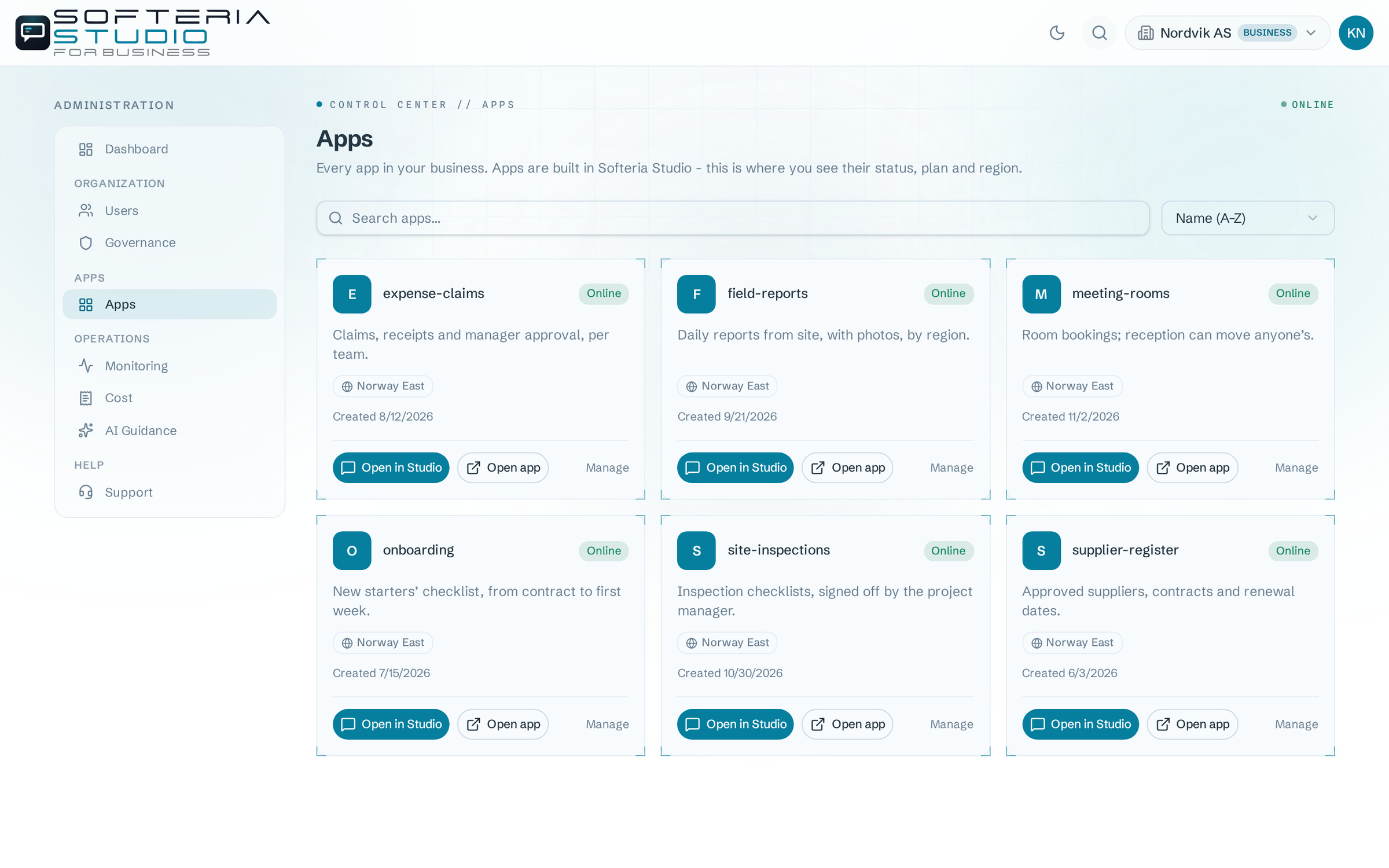
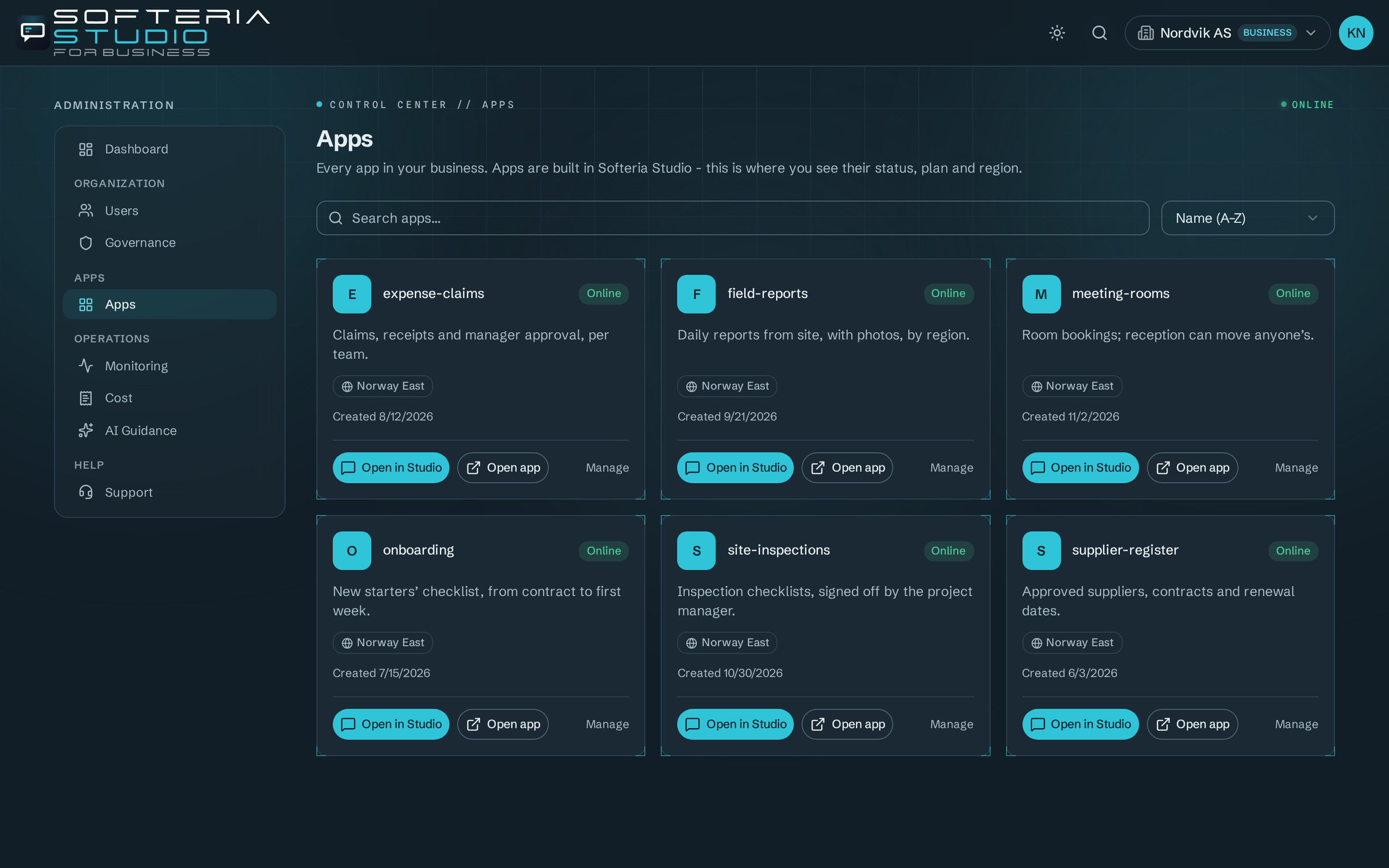
Every app
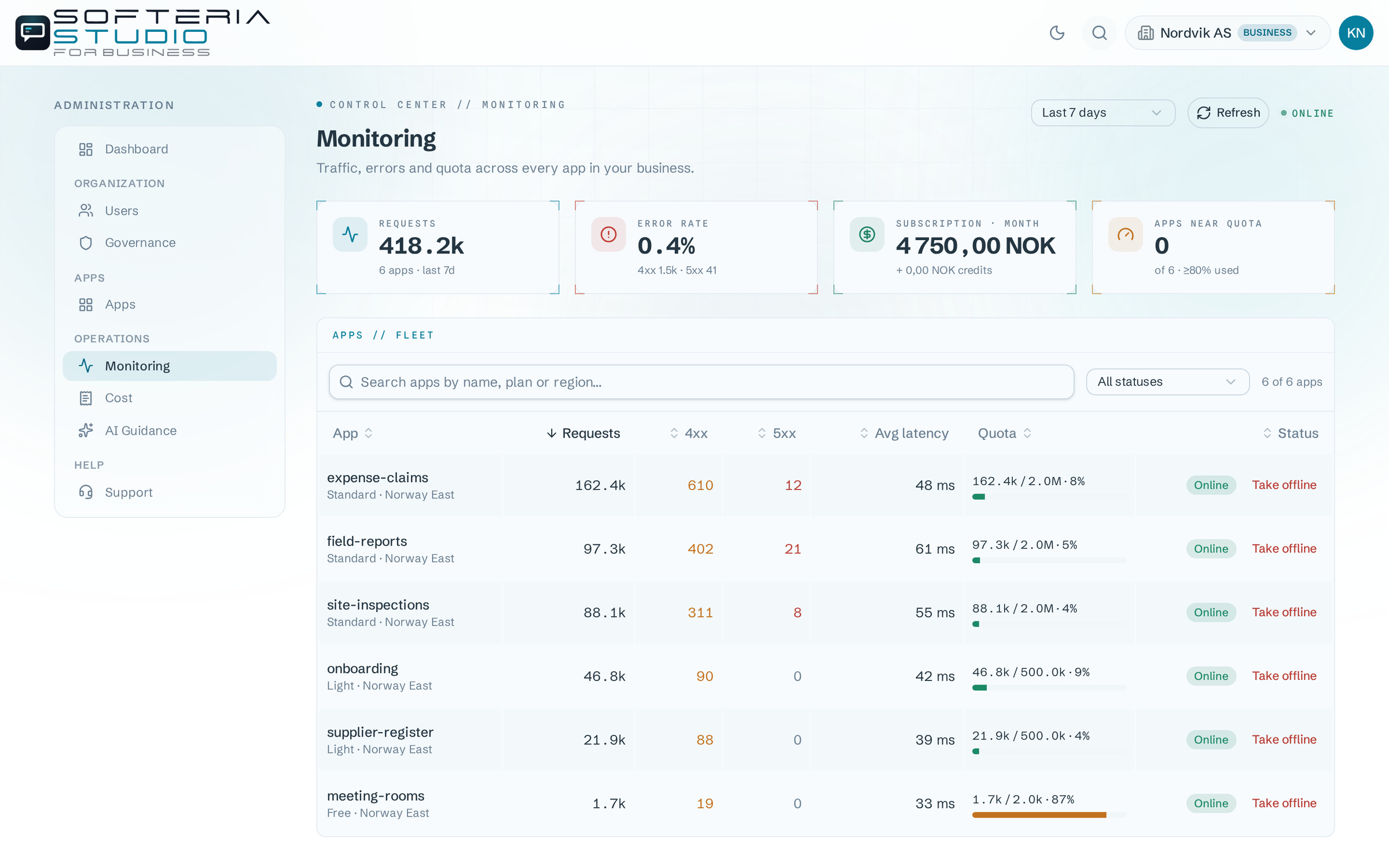
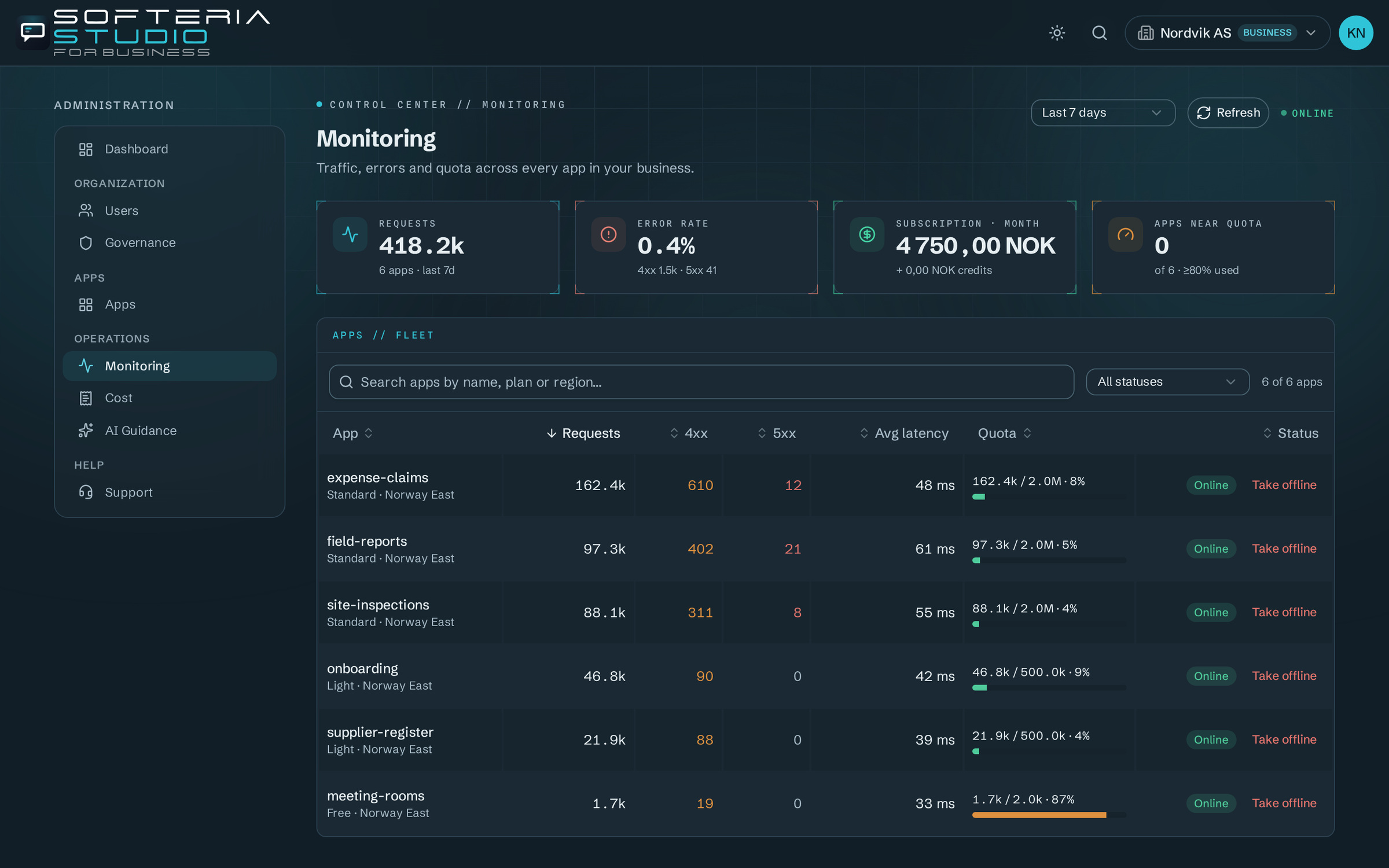
A week of traffic
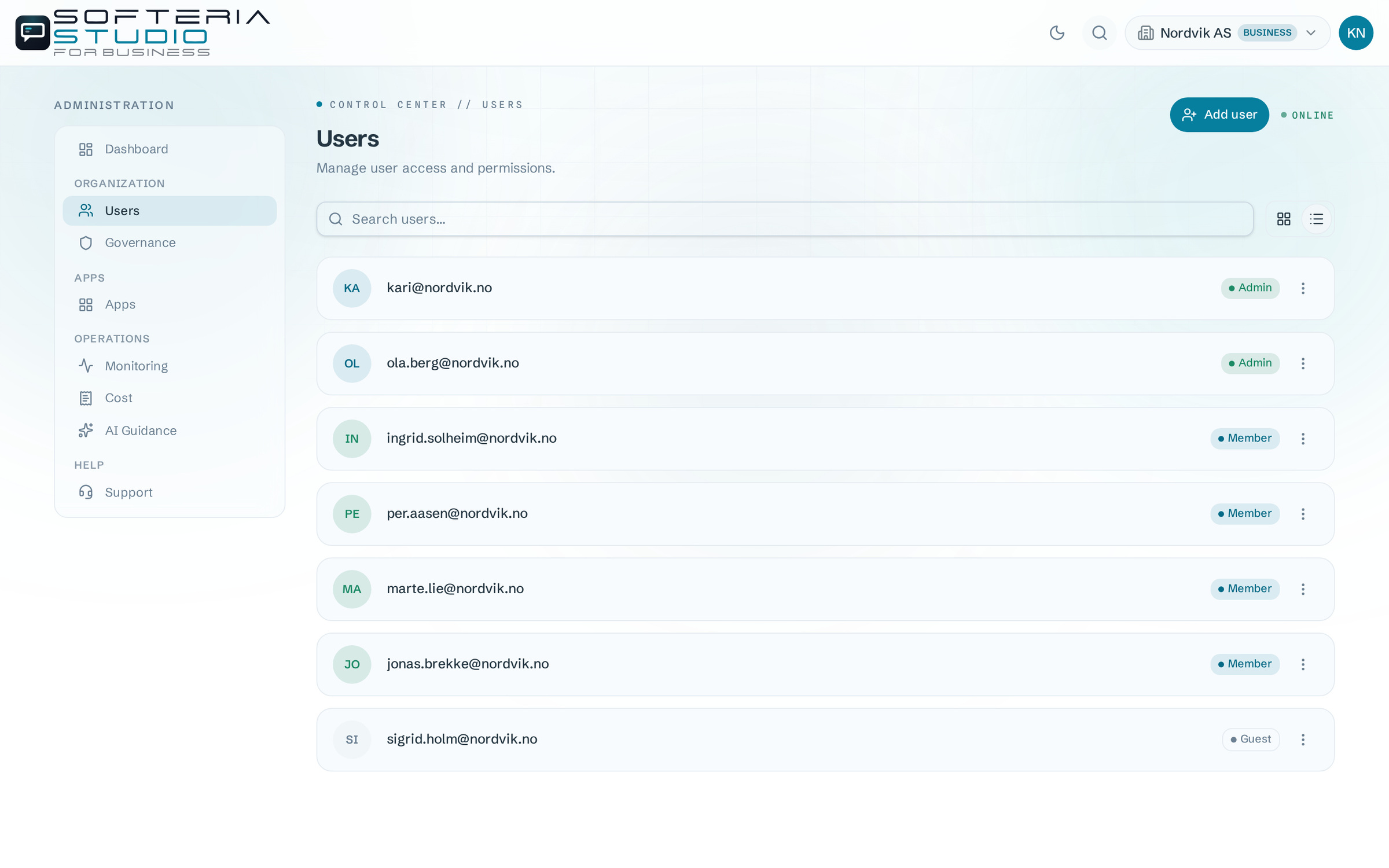
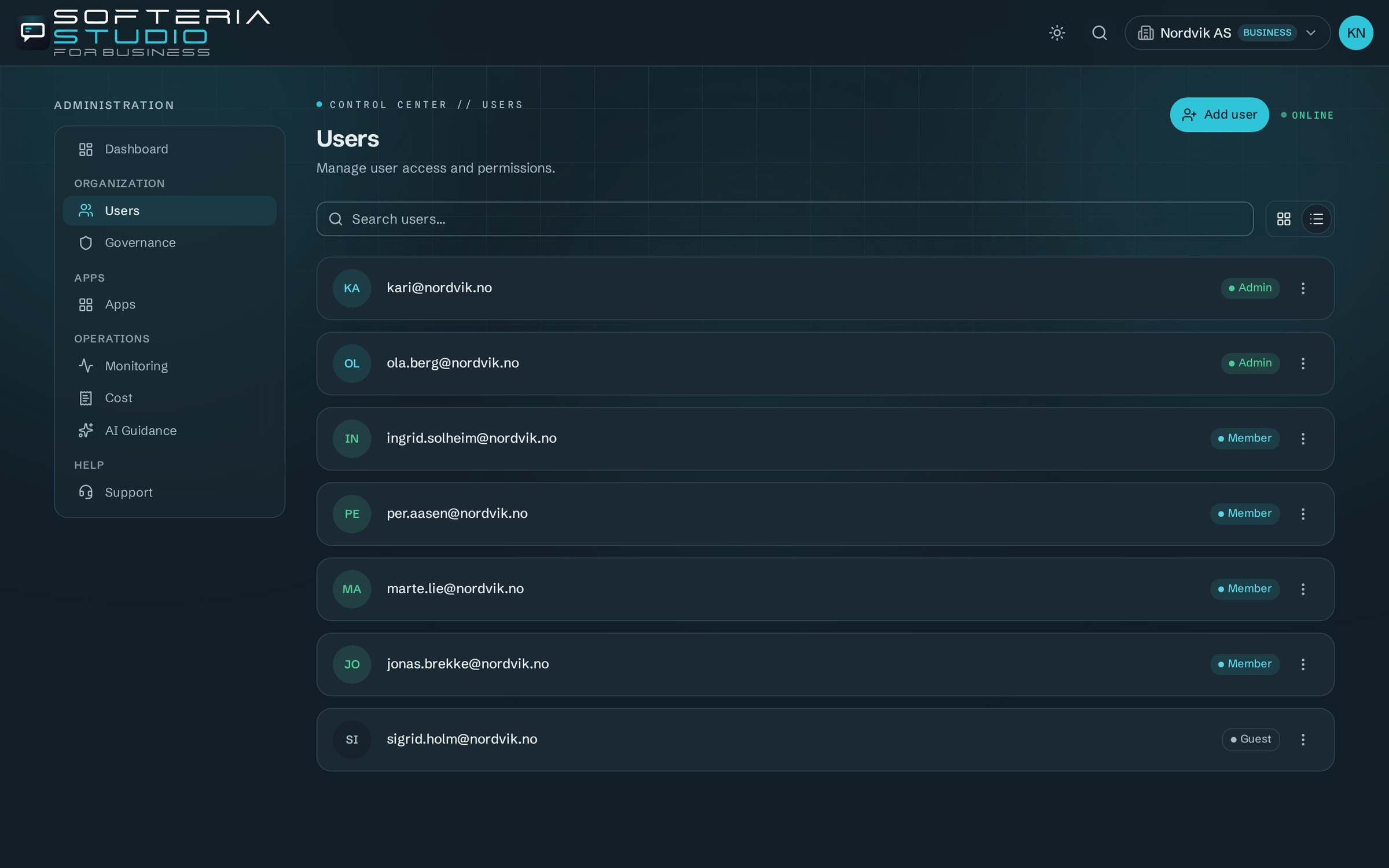
Every person
The work is getting done either way. The question is whether you can see it.
They are building anyway
None of the unapproved tooling in your company came from people being reckless. It came from people waiting. Forbidding it has never worked, because the alternative was always slower.
Where the work goes today
- The spreadsheet that quietly runs a department
- A tool somebody’s nephew wrote, on their own account
- A subscription nobody can cancel, because a process depends on it
- Data in three places, and no list of which three
Where it goes instead
- One sanctioned place to build, under your company’s rules
- Your own sign-in and the groups you already maintain
- Permissions enforced at the data, not on the screen
- A record of who built what, changed what and read what
- Hosting, deployment and backups run for you
- Everything exportable, the day you ask
You decide who may do what. Before anybody has to ask.
Who may do what
Written against the groups you already maintain in Microsoft Entra or Google Cloud Identity — so there is no second list of people to keep in step with the first.
| Group | Build apps | Reach live data | Publish company-wide | Administer Studio |
|---|---|---|---|---|
| Everyone | Not allowed | Not allowed | Not allowed | Not allowed |
| Builders | Allowed | Limited | Not allowed | Not allowed |
| Team leads | Allowed | Allowed | Limited | Not allowed |
| IT administrators | Allowed | Allowed | Allowed | Allowed |
An example set. Yours are whatever you say they are. Change somebody’s group in your directory and their access here changes with it — including on the day they leave. There is no separate list to remember, which is the list that always ends up wrong.
Three things that make it governable.
On the record
Connected where the data lives
Studio connects to data sources on your own premises, so data that has to stay there never leaves it.
Enforced at the data
Permissions are applied where the records live, so an application cannot accidentally hand somebody a row they were never allowed to see.
Written down
Who built what, who changed it and who reached which data is recorded. The answer is ready before the audit gets round to asking the question.